Switch from an antiperspirant to a deodorant and, for somewhere between one and three weeks, you will probably smell worse than you did before you started. This is the single most common reason people give up on the switch, it is widely described as a "detox," and it is not one. It's an ecology problem, and it resolves on its own.
Here's what's actually happening, and what shortens it.
Why it happens
An antiperspirant works by blocking sweat: aluminium salts dissolve in the moisture of the underarm and form temporary gel plugs in the sweat ducts. Less sweat reaches the surface, so the bacteria living there have less to eat.
Sweat itself is close to odourless. The smell is produced when skin bacteria — chiefly certain Corynebacterium and Staphylococcus species — metabolise compounds in sweat into volatile thioalcohols and fatty acids. Some of those molecules are detectable by the human nose at parts-per-billion concentrations, which is why a small shift in bacterial output makes a large difference in how a day ends.
Stop using the antiperspirant and two things change at once. Sweat volume returns to your baseline — not higher than before you ever used the product, but higher than your plugged-duct normal, which feels like an increase. And the bacterial community, no longer suppressed and newly well fed, shifts. Studies comparing underarm microbiomes have found that antiperspirant users host measurably different communities than deodorant users and non-users, and that the days after stopping are a period of genuine flux. The odour-heavy species tend to bloom before the community settles into its new equilibrium.
Nothing toxic is leaving your body during the transition. The aluminium plugs shed with normal skin turnover within days. What you are waiting out is the bacterial community rebalancing to a lower-odour steady state — the same reason the smell eventually settles even if you change nothing else.
What actually shortens it
Give it the full two to three weeks. This is the part no product can replace. Most people who report that "natural deodorant doesn't work for me" quit in week one, which is the worst week. If you can time the switch to a stretch when a bad day matters less — a holiday, a quieter work period — you remove the pressure that makes people abandon it.
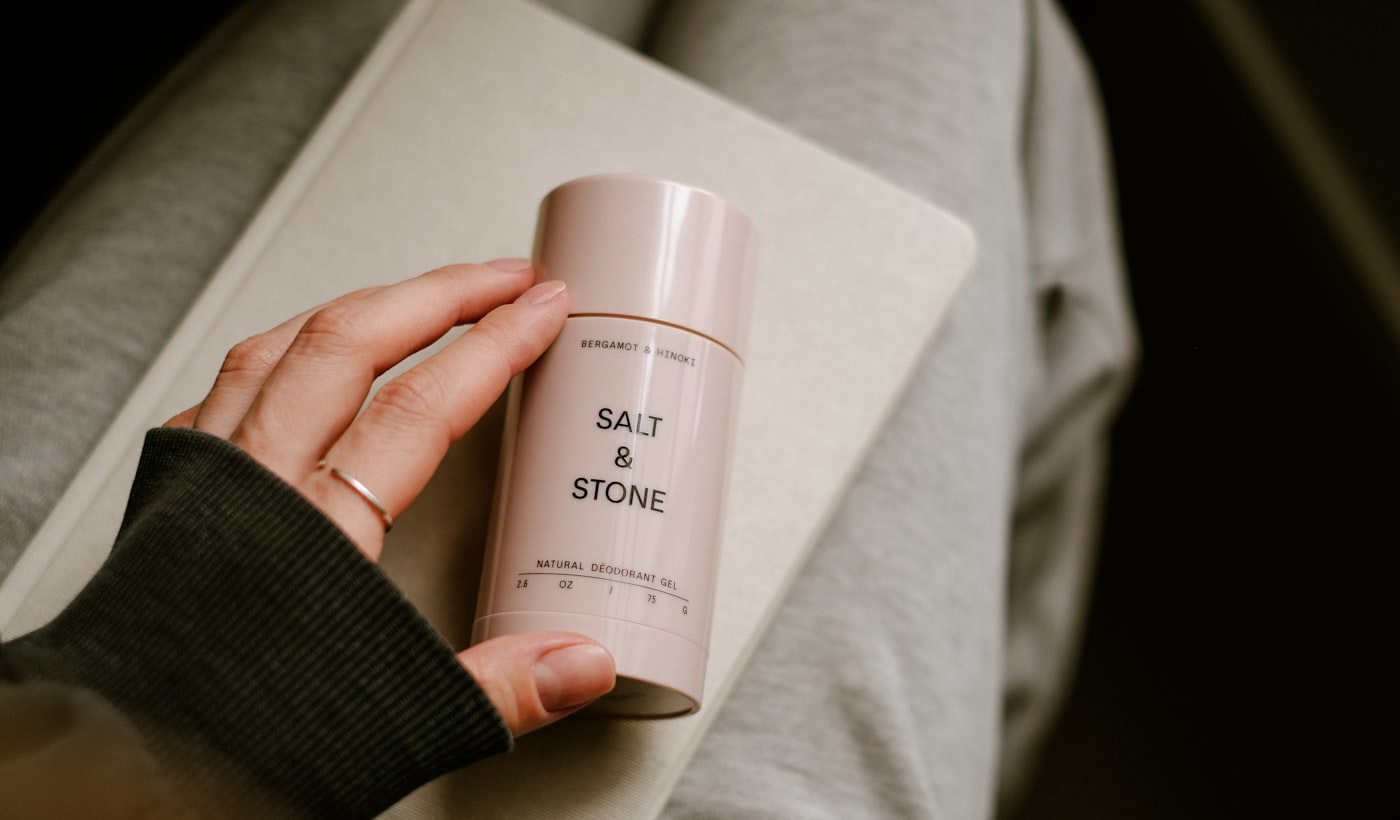
A deodorant is not a failed antiperspirant. It doesn't stop you sweating and isn't trying to. It works two ways: odour-masking fragrance, and raising the surface conditions — often with baking soda or magnesium — so odour-producing bacteria are less comfortable. Judge it on smell, not wetness.
Exfoliating the underarm occasionally helps, plausibly by clearing the substrate bacteria feed on. A gentle acid or a soft scrub once or twice a week is enough; there is no need for anything aggressive on thin underarm skin.
Baking soda is the most common irritant. If you develop redness, itching, or a rash a week or two in, the likely cause is a high-baking-soda formula raising your skin's pH — the underarm sits closer to neutral than your forearm, but a pH 9 paste still pushes it. Switch to a baking-soda-free formula built on magnesium hydroxide or zinc instead. This is a real reaction worth taking seriously, not another phase to push through.
The certified shelf
Deodorant is one of the four categories CertClean certifies — the odour-care category — and it comes with a hard rule worth knowing: antiperspirants are not eligible. The aluminium-salt mechanism that defines an antiperspirant is out of scope, so everything certified in this category is a true deodorant. If you're making the switch, a certified odour-care product is one whose full ingredient list has already been screened, which removes one variable from a change that already has several.
What certification does not tell you is whether a given formula will control your odour or irritate your skin — that's individual, and it's exactly what the transition period reveals. Certification checks the ingredients; your armpit checks the fit.
What we don't know
The underarm microbiome is real and individual, but it's less mapped than the gut, and most of the transition research is small. How long any one person takes to settle, and why some barely notice a transition while others have a rough fortnight, isn't well predicted by anything you can read on a label. The mechanism above is well supported; the timeline for you is an experiment with one participant.