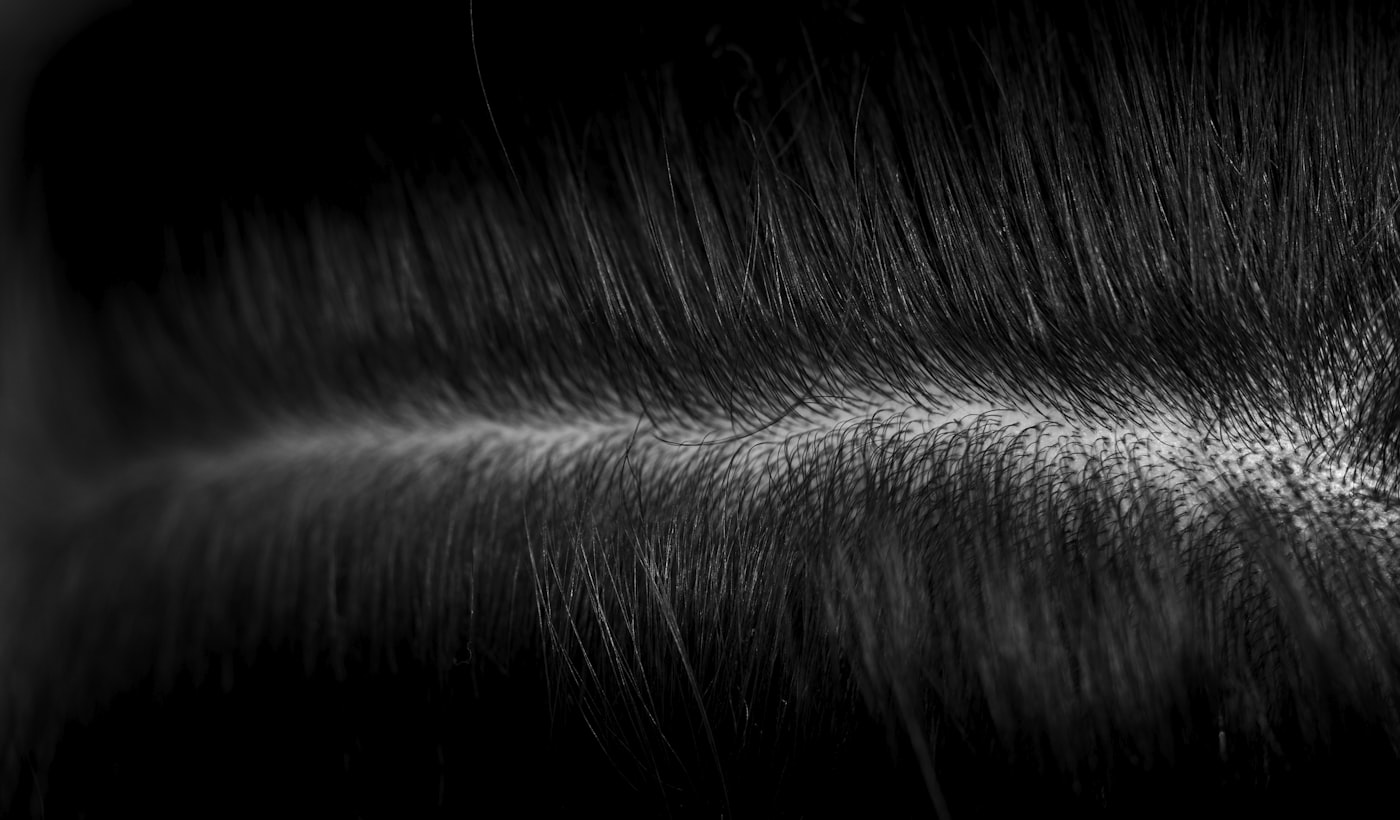
The scalp is skin — the same layered organ as your face, with the same barrier, the same microbiome, the same capacity to get irritated. But it's skin under unusual conditions: covered in hair, denser in sebaceous glands than almost anywhere else on the body, washed with detergents designed for fibre rather than skin, and largely ignored until it starts flaking. Treating it as skin, rather than as an extension of your hair, resolves most of the confusion.
Dandruff is not dry scalp
These are opposites, and the products for one make the other worse.
Dandruff is usually associated with too much oil, not too little. The current understanding centres on Malassezia, a yeast that lives on everyone's scalp and feeds on sebum. In susceptible people it metabolises sebum into irritating byproducts, the skin responds with faster cell turnover, and clumps of shed cells appear as visible flakes — often greasy, yellowish, and stuck to the scalp. This is the seborrhoeic-dermatitis end of the spectrum, and it responds to antifungal actives — zinc pyrithione, selenium sulfide, ketoconazole, and gentler agents like piroctone olamine — not to moisturiser.
Dry scalp is the actual barrier problem: too little oil and moisture, small dry white flakes, tightness, often part of generally dry skin or a reaction to a harsh shampoo. This one wants less washing and more gentleness, and antifungal dandruff shampoos can make it worse by stripping further.
The tell: greasy, larger, itchy flakes with oily hair point to the Malassezia side; small dry flakes with tight skin point to the barrier side. Get the direction wrong and every product you try seems to fail.
The scalp microbiome, honestly
The scalp hosts its own microbial community, dominated by Cutibacterium and Staphylococcus bacteria and Malassezia yeast, and imbalances in it associate with dandruff. That much is established. What's sold on top of it — "microbiome-balancing" scalp serums, prebiotic scalp mists — runs well ahead of the evidence. We know the community exists and that it matters for dandruff. We don't have good evidence that most consumer products meaningfully or durably reshape it. Treat the category as promising and unproven, and don't pay a premium for the word.
What the scalp actually needs
For most people, less than the aisle implies.
Wash to comfort, not to schedule. Oily scalps tolerate and often want frequent washing; dry or curly-textured scalps usually do better with less. The "never wash more than twice a week" rule is not universal — it comes from hair-fibre concerns, and your scalp is not your hair.
Match the active to the direction. Antifungal shampoos for the greasy-flake side, used a few times a week and left on for a few minutes to work. Gentle, non-stripping cleansing for the dry side. A scalp that's both irritated and flaky may need a dermatologist rather than a fourth shampoo.
Sun matters here too. A part line and a thinning crown are sun-exposed skin, and among the more common sites for the skin cancers people miss precisely because they never look there.
The certified shelf
Hair and wash products are within CertClean's scope — shampoos, conditioners, scalp treatments all fall under the wash-products category — so if you're choosing a scalp product and want the ingredient list pre-screened, the certified set is a place to start. A handful of certified brands make scalp-specific treatments and rice-protein or botanical shampoo systems, and because the certification covers the full formulation, the "what's actually in this" question is already answered.
What it doesn't answer is which mechanism you need — antifungal versus barrier-gentle — and that's the decision that actually determines whether a scalp product works for you. Certification screens the ingredients; the flake type tells you what to buy.
What we don't know
Why some people harbour reactive Malassezia populations and others don't isn't fully understood, and dandruff is chronic and relapsing rather than curable — managed, not solved. The durability of "microbiome" interventions is genuinely unresolved. And the line between cosmetic dandruff and medical seborrhoeic dermatitis is a spectrum, not a border, which is why persistent cases belong with a clinician.