Most personal care marketed to men is the same product in a darker bottle at a similar price, sold with a vocabulary — "fuel," "defense," "charcoal for deep cleaning" — designed to make basic maintenance sound rugged enough to be permissible. Strip the branding and the biology, and men's skin needs almost exactly what everyone's skin needs, with two or three real differences worth knowing.
What's actually different
Skin is a bit thicker and oilier on average. Androgens drive larger sebaceous glands, so male skin tends to run oilier and its surface is on average somewhat thicker. "On average" is doing real work here — the overlap between individuals is enormous, and your own skin type matters far more than your sex. If your skin is dry, it's dry; no amount of male-coded packaging changes that.
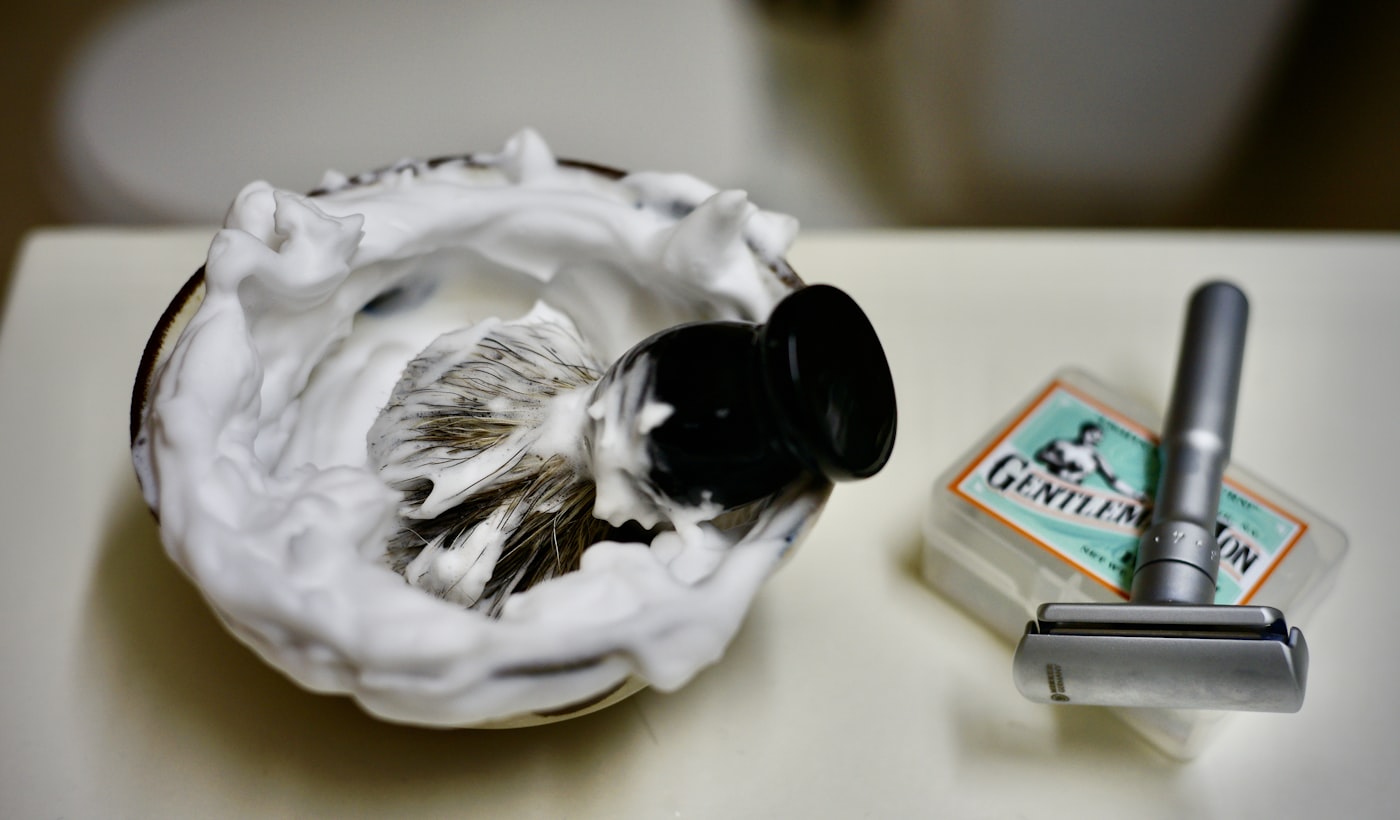
Shaving is the big one. Regular facial shaving is a daily exfoliation-and-abrasion event no skincare line invented, and it drives the two most common complaints: irritation and ingrown hairs. Razor bumps — pseudofolliculitis barbae — are hairs curling back into the skin, and they're far more common and more severe in men with coarse or curly facial hair, where they can cause lasting marks and scarring. This is the single most useful place to spend attention, and it's usually undersold in favour of anti-ageing serums.
That's roughly it. Beyond thickness, oiliness, and shaving, the differences are marketing. The barrier is the same barrier. Sunscreen matters identically. Retinoids work the same way.
The genuinely short routine
A cleanser that doesn't leave you tight. Once or twice a day. The "deep clean," "charcoal," "scrub" framing tends to point at harsher surfactants, which strip the barrier and, on oily skin, can prompt more oil in response. Gentle is not the soft option; it's the correct one.
A moisturiser. Even oily skin. Skipping it doesn't reduce oil, and post-shave skin in particular needs it.
Sunscreen. Same reasons as everyone. Men have lower average sunscreen use and higher melanoma mortality, which is a bad combination and an easy one to fix. The specification that matters is whether you'll actually wear it, so a light, non-greasy finish is worth more than any number on the label.
Shaving, done to reduce irritation
- Soften first — shave after a warm shower, not before.
- Sharp blade, light pressure, with the grain if you're prone to bumps.
- A lubricating cream or oil rather than a foaming gel, so the blade glides instead of dragging.
- Moisturise immediately after. A fragrance-heavy alcohol splash on freshly abraded skin is the classic own goal — it stings because it's irritating, not because it's working.
- If ingrown hairs are a persistent problem, growing the beard out or seeing a dermatologist beats another aftershave.
The certified shelf
The products a man actually needs — a gentle cleanser, a moisturiser, a shave oil or balm, a deodorant — sit squarely inside CertClean's certified categories (wash products, skincare, odour care). A few certified brands make explicitly men-marketed items, but the more useful point is that you can ignore the "for men" label entirely and pick a certified fragrance-free cleanser, moisturiser, and deodorant. The seal means the ingredient list has been screened; it is indifferent to which bottle the marketing department coded masculine.
If you do want fragrance-free — reasonable if you shave daily and don't want to layer irritation onto already-abraded skin — that's a specific, checkable label, and worth distinguishing from "unscented," which can mean a masking fragrance was added.
What we don't know
The "men's skin is X% thicker" statistics get repeated with more precision than the underlying studies support; the honest version is "somewhat thicker and oilier on average, with huge individual overlap." And whether beard-area skin genuinely needs dedicated products, versus the same gentle care applied under a beard, isn't well established. Most of it is the same skin.