They get shelved together and shopped for interchangeably, but they solve different problems by different mechanisms, and the difference is the whole reason the switch between them feels dramatic. One reduces sweat. The other manages smell. Neither does the other's job well.
What each one does
An antiperspirant reduces the amount of sweat that reaches the skin. Its active ingredients are aluminium salts — aluminium chlorohydrate, aluminium zirconium compounds — which dissolve in the moisture already on your skin and form soft gel plugs just inside the sweat ducts. Fewer ducts flowing means less sweat at the surface. Because it works on the ducts, an antiperspirant is a drug in regulatory terms in several markets, including the US, where it's covered by an over-the-counter monograph and has to state an active-ingredient percentage.
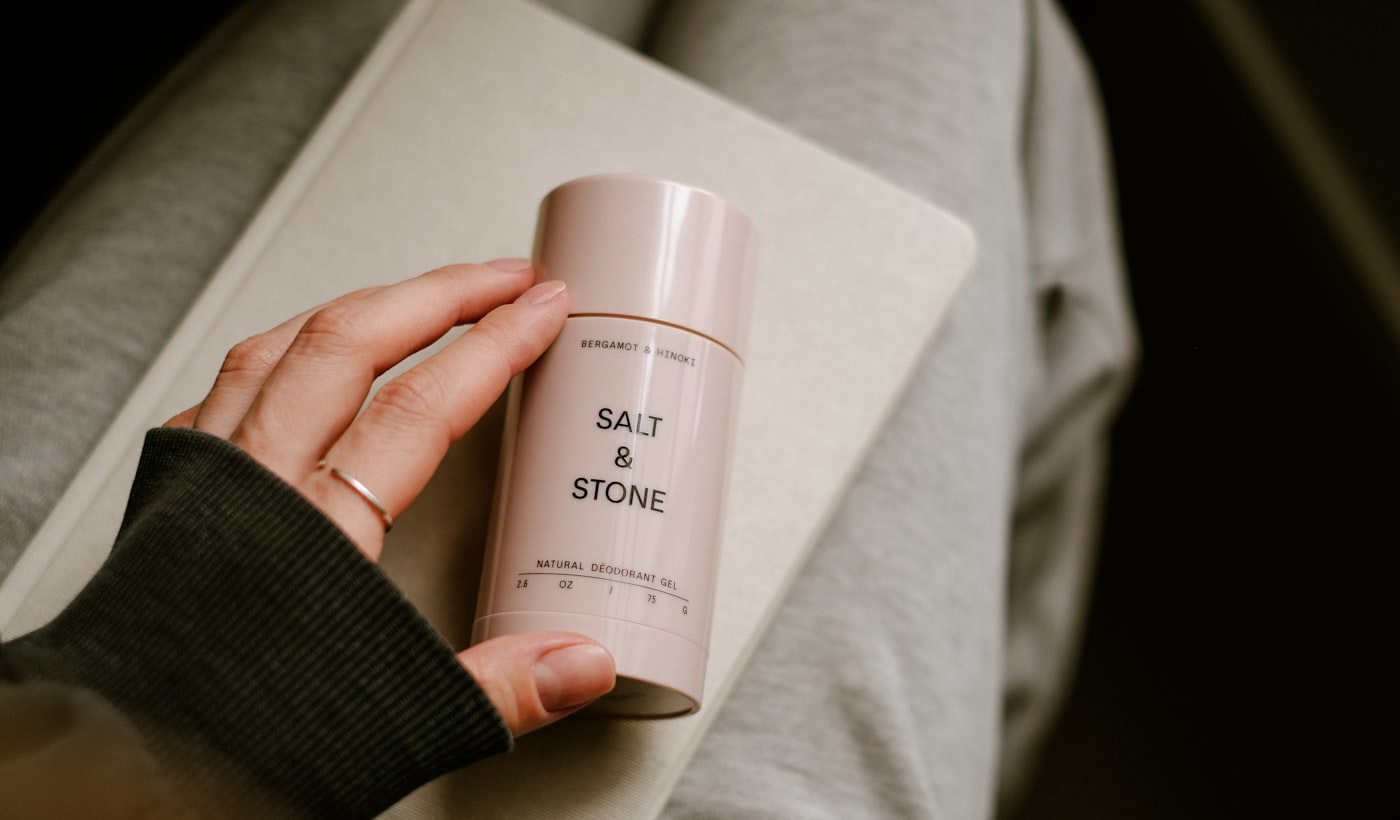
A deodorant does nothing to sweat volume. It targets the smell, which sweat doesn't produce on its own — bacteria do, by breaking down compounds in sweat into odorous molecules. Deodorants attack that step: fragrance to mask, and ingredients that make the skin surface less hospitable to odour-producing bacteria, such as baking soda, magnesium hydroxide, or zinc salts. A deodorant is generally a cosmetic, not a drug.
That's the entire distinction. Sweat versus smell; ducts versus bacteria; drug versus cosmetic.
The aluminium question, answered plainly
The reason many people go looking for a deodorant in the first place is a worry about aluminium. Here is the honest state of it.
The two health concerns that circulate are breast cancer and Alzheimer's disease. For both, the weight of evidence does not support a causal link at the exposures antiperspirants produce. Major cancer research bodies have reviewed the breast-cancer claim and found no established connection; the Alzheimer's association traces back to older hypotheses that later work did not bear out. Regulators continue to permit aluminium antiperspirants.
There is one genuinely open thread: how much aluminium is absorbed through underarm skin, particularly freshly shaved skin, and what — if anything — that systemic dose does over decades. Some regulators have looked at this and adjusted guidance on daily exposure. "Under-characterised" is a fair description. "Proven harmful" is not, and the gap between those two phrases is where most of the fear marketing lives.
So the accurate summary is: if you want to avoid aluminium, that's a reasonable personal choice, and you should make it knowing that the evidence for harm at real-world doses is weak rather than being told a switch is medically urgent.
Which one you actually want
Heavy sweat, or sweat that has to be controlled — a wedding, a presentation, a medical issue like hyperhidrosis — is an antiperspirant job. No deodorant reduces wetness, and pretending otherwise sets people up to conclude their deodorant "failed."
Odour control without needing to stay dry is a deodorant job, and it's most of daily life for most people.
Both, at different times, is entirely reasonable. Nothing stops you using a clinical antiperspirant for the occasional high-stakes day and a deodorant the rest of the week.
Where CertClean sits
CertClean certifies deodorants, in its odour-care category — and explicitly excludes antiperspirants, because the aluminium-salt mechanism is out of the standard's scope. That's a scope decision, not a safety verdict on aluminium: the standard is drawing a line around what it screens, not declaring what's on the other side of the line dangerous. It's a good illustration of the general point that a certification tells you what was checked, and reading the boundary of what it checks is as informative as reading the pass itself.